
Organizing the Unimaginable: How the mejo App Helped Our Family Navigate CHD Care
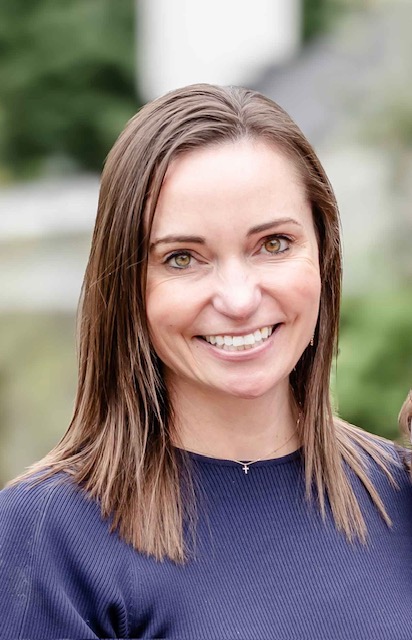
Written by: Ashley Kollme, Sophie's mom and caregiver
Our precious daughter Sophie is our youngest of five children and was born with an extremely rare genetic condition caused by a mutation in the GATA6 gene. GATA6 syndrome can cause heart defects, hypothyroidism, and GI issues. Prior to knowing about Sophie’s genetic condition, our Maternal Fetal Medicine specialist diagnosed her with a rare and complex congenital heart defect (CHD) called Truncus Arteriosus.

Sophie had her first heart surgery at Johns Hopkins Hospital at one week old, and due to unforeseen complications, came back on ECMO (life support) and had to have a revision of the initial surgery. After the second open-heart surgery, she spent another 12 days on ECMO, suffering a brain bleed, seizures, and blood clots in her fingers. After miraculously decannulating from ECMO, she had a prolonged intubation and extended recovery.
Sophie came home in August 2023 for the first time after 86 days in the hospital. Her four older siblings were louder than the beeps and alarms of the ICU, making for a smooth transition. She had a feeding tube, twice-daily respiratory treatments due to residual lung disease, a total of 23 syringes of medication given per day, and many regular follow-up appointments with her specialists. She was on a detailed, months-long schedule to slowly wean off of heavy pain medications with methadone and clonidine, where we had to carefully track any symptoms of withdrawal.

This is where mejo comes in...
(mejo® is a revolutionary caregiving assistant app designed to empower families and caregivers with comprehensive tools for managing and enhancing the care of their loved ones. mejo ensures that every patient and family member is connected, informed, and supported.)
I wish I had found this brilliant app the moment we first came home with Sophie.
Every time I visited a specialist, therapist, or her pediatrician in my sleep-deprived haze, I was bombarded with the same questions that I felt I had answered many times before, or that should have been highlighted as the most basic information in her chart.
The common question at the beginning of every appointment was always, “What medications is she taking?” Usually that was easy to clear up from memory, but I often had to pull up her MyChart to confirm the dosages and concentrations.
The harder issue was summarizing the vast load of medical notes and simplifying explanations of her story and diagnoses to providers. I needed to learn an elevator pitch about Sophie’s journey, where she was, where she is now, and what was next, not only for her heart condition, but also every major organ affected by her complicated course. I needed to have an update on her methadone and clonidine weans, and try to collaborate with providers to determine whether her regular vomiting was from her GI issues or withdrawal. Providers and therapists expected an update on her feeding journey, including her G-tube feeds that were always changing and evolving as we experimented with what worked; how much formula she was consuming over how many hours; and the rates of her feeds on the pump.

When I was with her feeding specialist, I shared a different version of her current story than when I was with her cardiologist. When I was with the GI team, I shared a lot about feeding, some about cardiology, and nothing about pulmonology. When I was with pulmonology, I shared information about cardiology but nothing about feeding.
We schedule and show up to appointments and take advantage of every service to do the best by our child, and in the process are expected to know and be able to summarize the whole story, and be sophisticated enough to know which parts to share with which providers.

Since Sophie’s homecoming just over two years ago, she has had two cardiac catheterizations, a month-long hospital stay due to complications closing her G-tube tract, and has overcome RSV (twice!), COVID, and other illnesses. She has made long strides and is a happy, thriving two year-old, largely because of the compassion and engagement of her older siblings. Sophie loves listening to music, dancing, reading books, nurturing her many baby dolls, playing outside in all weather, and kicking any ball, even if it’s not intended for soccer.
Despite the fact that she is doing so well, I still spend an enormous amount of time on her health needs, including drawing up and giving medications twice per day, preparing for her night feeds, scheduling and attending appointments, researching and understanding her heart and GI conditions, and advocating for her needs with pharmacies, insurance companies, and her part-time preschool.
I often worry about what would happen if I was out of commission for a day, or worse?
When I found mejo, I got so excited, and the more I filled out the journal, the more enthusiastic I got about this answer to my potential liberation from always summarizing off-the-cuff, and always worrying that the most important information will not be in the hands of her loved ones who also want to “step up” on her medical journey.
I thought that what I put down on paper was at least the bare minimum that my husband or our nanny would need to know if I was hit by the #9 bus.
No, nothing could replace being the person who lived through almost every moment of my daughter’s medical journey, and no, they could not summarize everything. But this was the ticket that would guarantee that all of the most important information was on a two-sided document.

And then something happened last week. We had an incident with Sophie’s G-tube that served as a reminder of the vast volume of information I hold in my brain that I take for granted, and how much I have minimized the G-tube component because her heart issues are always at the forefront of my mind. We have labeled her a “heart warrior” for a reason, but that can cause us to minimize the other effects of GATA6 on her body.
Sophie has had many complications with her G-tube, and it is often leaky around the tract, especially if she is sick. Sophie’s G-tube fell out last week, due to a leak in the balloon that holds it in place in her stomach. When I had to resolve the issue, I went down a path that reminded me of the circular story in the children’s book If You Give a Mouse a Cookie. If you give a mouse a cookie, then he will ask for milk, and then a straw, and then a mirror, and more, and eventually the story loops back to him wanting another cookie.

Well, if you give a mom a new G-tube to replace the old one, she will ask herself where the special syringe is to inflate the balloon. And when she finds the syringe, she will need to find sterile or distilled water. Then she has to know how much water to put in the balloon (it’s extra for Sophie). When you give the mom the water and syringe, she will ask for the large syringe and extension tubing to check that the new G-tube is working. And after she confirms the new G-tube is working properly, she will ask herself to email her contact for medical supplies to order another tube for the next replacement. When she emails the supplier, she will ask for the paper that documents the exact tube name and current size (12FR, 1.5 cm MIC KEY). And when the supplier emails back saying they are changing brands, the mom will ask herself which contact to ask (and via email? or text if lucky to have their number? or MyChart which might delay the process?) to write a letter about why Sophie cannot change brands because of her complicated history of leaking. And the narrative goes on and loops back to mom wanting a new G-tube.
If none of this information about a “simple” G-tube switch was documented, it could mean a whole day in an ER, and still not solve the problem for the next time.
After that experience, I updated Sophie’s mejo, which is one of the beautiful aspects of the app. I realized that there are more pieces of information that needed to be summarized and love that the journal will spit out a new version of her summary at any moment with any update I deem necessary for other loved ones and caretakers to know. I have even created separate versions for home/babysitters, doctor’s visits, and pre-school.

My hope is that the next time I update mejo, it can be something fun about her baby doll daycare or first soccer game in her visual narratives. Either way, I am so grateful for the gift of this app and how it can revolutionize the way that medically complex children can be cared for by everyone in their lives who love and care about them.
I encourage all families navigating CHD or medical complexities with a loved one to try out mejo. You'll be glad you did.


WOAH! I thought I was plugged into the Sophie story. Hardly! Soooo much more complicated than I ever inagined. You rock Ashley - and the whole Kollme Haus team, and Team Sophie!